




Content That Works Everywhere: Apps, Sites, Social – One System
Stop copying content between platforms. Learn how a unified content system delivers your message consistently to websites, apps, kiosks, and social media from a single source.

Content That Works Everywhere: Apps, Sites, Social – One System
Picture this scenario:
Your marketing team updates the new product launch date on the website. But they forget to update the mobile app. And the digital signage in your stores. And the email templates. And the partner portal.
Your customers see different dates in different places. Confusion. Complaints. Lost trust.
This happens constantly. And there's a better way.
The Copy-Paste Problem
Most businesses manage content across multiple platforms through copy-paste:
- Write content in a document
- Copy to website CMS
- Copy to mobile app backend
- Copy to email platform
- Reformat for social media
- Update store displays manually
What could go wrong?
- Version mismatches (one platform shows old info)
- Formatting inconsistencies
- Wasted hours on repetitive work
- Errors introduced during copying
- No single source of truth
A survey found that marketers spend 25% of their time recreating content for different platforms. For a marketing team of 4, that's one full-time person just copying and pasting.
The Single Source of Truth
Imagine instead:
- Write content once in a central system
- That content automatically flows to:
- Your website
- Your mobile app
- Your in-store displays
- Your email templates
- Your partner portals
- Anywhere else you need it
One update. Every platform. Instantly.
This is omnichannel content management.
How It Works (Non-Technical Explanation)
Think of it like a restaurant kitchen:
Traditional approach: Every waiter has their own mini kitchen. When the menu changes, each waiter has to update their own ingredients and recipes. Some forget. Some make mistakes.
Omnichannel approach: One central kitchen. Waiters take orders to the kitchen, and the kitchen sends out the right dish every time. Menu changes happen in one place.
Your content is the kitchen. Your platforms (website, app, displays) are the waiters. They all pull from the same source.
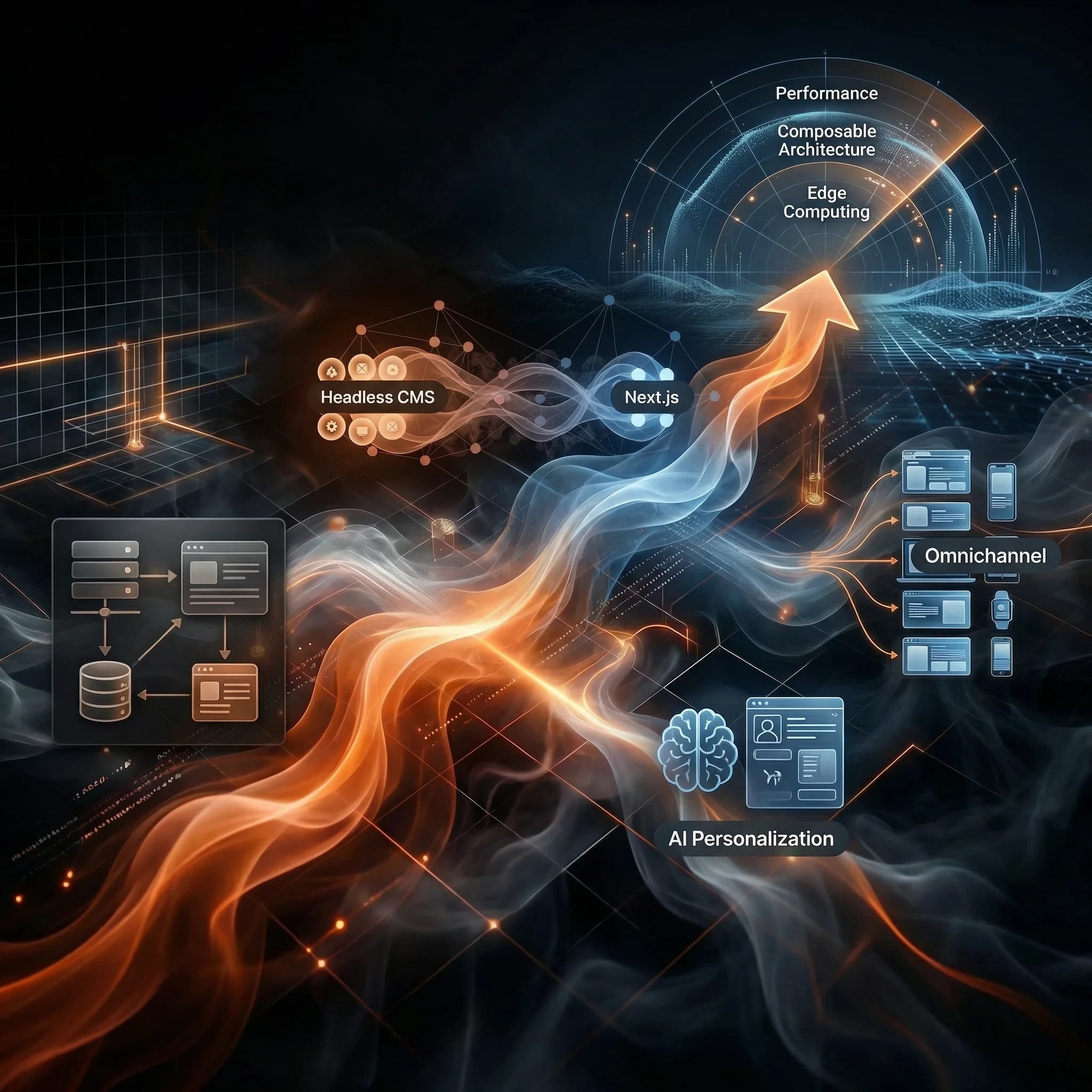
Technical Version: A headless CMS stores content as structured data. APIs deliver that content to any frontend (website, app, kiosk, etc.). Each frontend displays the content appropriately for its context.
Real-World Examples
Retail: Consistent Product Information
Challenge: A retail brand sells through their website, mobile app, in-store tablets, and partner websites. Product info was managed in 4 different systems.
Solution: One headless CMS became the source for all product content.
Results:
- Product updates now take minutes, not days
- Zero inconsistencies between channels
- 40% reduction in customer service questions about product specs
Restaurant Chain: Menu Everywhere
Challenge: 50 locations with menus on websites, apps, third-party delivery platforms, and digital menu boards. Updating seasonal items was a nightmare.
Solution: Centralized menu management with automated distribution.
Results:
- Menu changes go live everywhere in under 5 minutes
- Price consistency across all platforms
- Calories and allergen info always accurate (legal compliance)
B2B Company: Sales Enablement
Challenge: Sales team used outdated product sheets. Marketing updated the website, but PDFs and sales decks stayed old.
Solution: Product information flows from CMS to website, generates PDFs automatically, and feeds sales deck templates.
Results:
- Sales always has current information
- Proposals generated in minutes with accurate data
- Brand consistency across all sales materials
What You Can Connect
A proper omnichannel setup can deliver content to:
| Platform | Example Content |
|---|---|
| Website | Product pages, blog, landing pages |
| Mobile apps | Product catalog, articles, notifications |
| Digital signage | Promotions, menus, announcements |
| Email platforms | Product data, dynamic content blocks |
| Social media | Auto-formatted posts, product feeds |
| Partner portals | Dealer/distributor content |
| Chatbots | FAQ answers, product info |
| Voice assistants | Product data, support info |
| Catalog generation, signage |
The Technology Stack
For omnichannel content to work, you need:
1. Headless CMS (Content Hub)
- Sanity, Contentful, or Strapi
- Stores content as structured data
- Provides APIs for any system to access
2. Content Model Design
- Structured content (not just blobs of text)
- Reusable content blocks
- Relationships between content types
3. Delivery Endpoints
- Website frontend (Next.js, Nuxt, etc.)
- Mobile app integration
- API connections to other systems
4. Automation Layer (Optional but Powerful)
- Triggers for content updates
- Automated formatting for different channels
- Workflow approvals
Content Modeling for Omnichannel
The secret sauce is how you structure content.
Bad: Page-Based Content
Page: "About Us"
- Hero image
- Body text (big blob of HTML)
This only works for one website. Try using that HTML blob in a mobile app, and it's a mess.
Good: Structured Content
Company Info:
- Name: "ACME Corp"
- Tagline: "Making things better"
- Description: (plain text)
- Logo: (image asset)
- Founded: 1985
- Headquarters: "New York, NY"
Now any platform can use this data appropriately:
- Website: Full about page layout
- App: Compact company profile
- Signage: Logo and tagline
- Email: Dynamic signature block
Starting Small: Practical Steps
You don't need to implement everything at once. Here's a phased approach:
Phase 1: Website Foundation
- Migrate to a headless CMS
- Structure content properly
- Get your website running well
Phase 2: Add One Channel
- Pick your highest-impact second channel
- Usually mobile app or email
- Prove the concept works
Phase 3: Expand
- Add additional channels
- Build automation
- Optimize workflows
Quick Wins
Some immediate wins even before full implementation:
-
Audit your content touchpoints
- Where does content live?
- Who updates each platform?
- How long do updates take?
-
Identify your "golden records"
- Product information
- Pricing
- Company details
- Key messaging
-
Start structuring
- Even in your current system
- Separate content from formatting
- Think in components
Common Concerns (Addressed)
"We're too small for this"
If you manage content in more than one place, you're not too small. Even solo entrepreneurs benefit from a single source of truth.
"It sounds expensive"
Headless CMS platforms like Sanity have generous free tiers. The bigger cost is content drift—inconsistent info across platforms.
"Our team won't adapt"
Modern headless CMS interfaces are often easier than traditional CMS. Most teams adapt within a week.
"What about our legacy systems?"
APIs can usually connect to legacy systems. Start with new channels and migrate legacy over time.
Measuring Success
How to know if omnichannel content is working:
| Metric | Before | Target |
|---|---|---|
| Time to update all platforms | Hours/days | Minutes |
| Content inconsistencies found | Weekly | Rarely |
| Marketing time on content formatting | 25% | <10% |
| Customer complaints about wrong info | Regular | Rare |
The Competitive Advantage
Companies with unified content operations can:
- Launch campaigns faster
- Maintain brand consistency
- Scale to new channels easily
- Respond to market changes quickly
- Reduce operational costs
Those without spend time on busywork while competitors innovate.
Next Steps
If you're considering omnichannel content management:
- Audit current state - Map where content lives today
- Prioritize channels - Which connections would save the most time?
- Plan content model - How should content be structured?
- Start small - Prove value before expanding
Related Reading:
- Headless CMS Explained Simply — Understand the foundation of omnichannel content
- Content Modeling Best Practices — How to structure content for reuse
- 10 Best Headless CMS Platforms — Choose the right platform for your needs
I help businesses plan and implement omnichannel content strategies. Whether you're just exploring or ready to build, let's talk.
Managing content across multiple platforms? Reach out for a free consultation on simplifying your content operations.