




2026 Website Trends: What's Coming and How to Prepare
AI integration, edge computing, and new interaction patterns are reshaping the web. Here's what forward-thinking businesses need to know about 2026 website trends.
2026 Website Trends: What's Coming and How to Prepare
The web evolves fast. What worked in 2023 is becoming obsolete. What feels novel today will be table stakes tomorrow.
2026 is shaping up to be a pivotal year. AI is maturing beyond hype. Performance expectations are tightening. User behaviors are shifting.
Here's what you need to know—and do—to stay ahead.
Trend 1: AI-Native Experiences
What's Happening
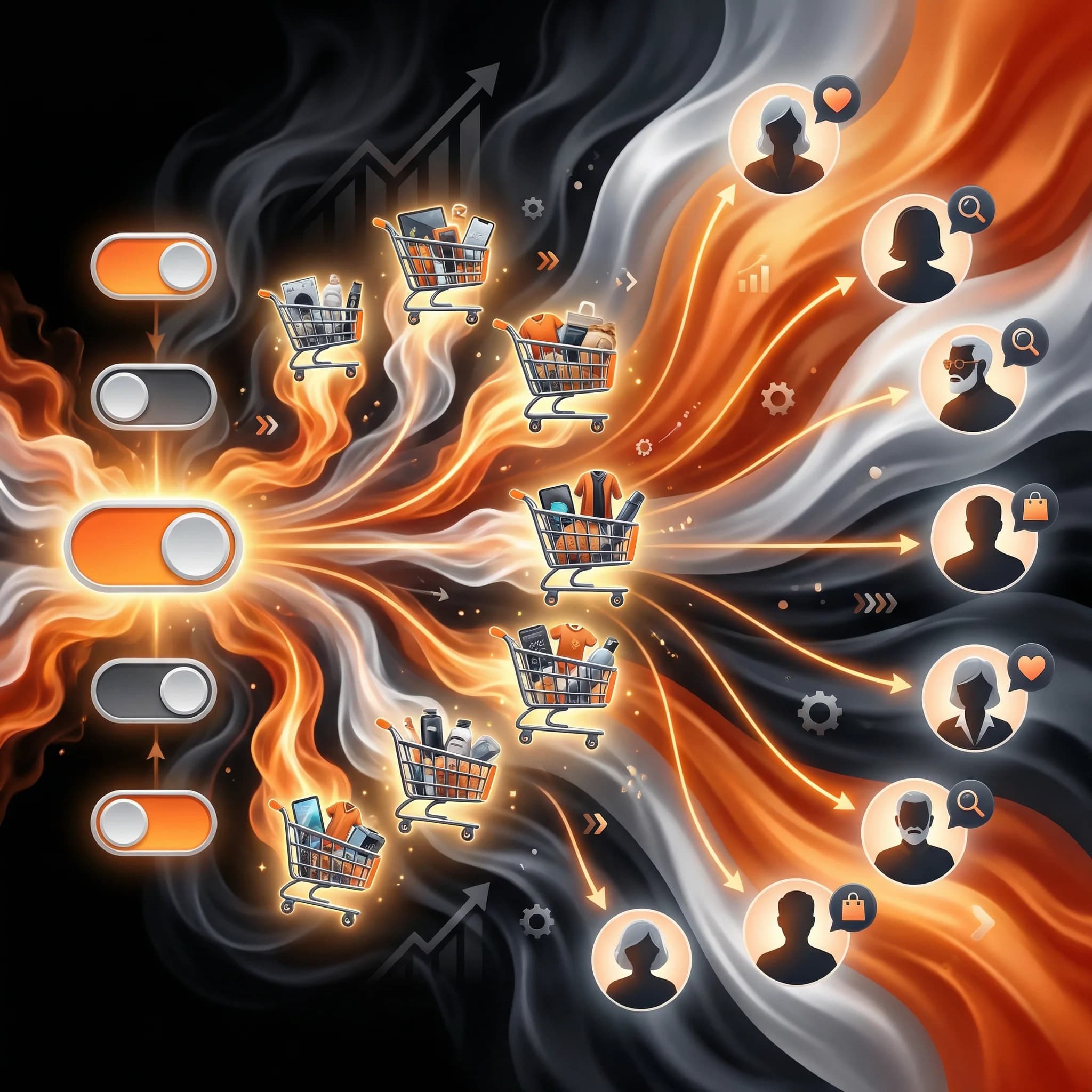
AI is moving past the bolt-on chatbot widget and into the core of web experiences:
- Content that writes itself (partially): AI assists with personalized product descriptions, localized content, and dynamic copy variations
- Design that adapts: Layouts that adjust based on user behavior patterns
- Search that understands intent: Natural language queries returning precise results
- Support that actually helps: AI that resolves issues, not just deflects them
Real Examples
E-commerce: Product pages that rewrite themselves based on visitor segments. A photographer sees technical specs emphasized. A parent sees safety features highlighted.
B2B: Proposal generators that pull from your content library, customize for each prospect, and maintain your brand voice.
Media: Headlines that A/B test themselves continuously, optimizing engagement without human intervention.
How to Prepare
- Structure your content — AI works better with organized, tagged content
- Audit your data — What customer signals can you capture and use?
- Start small — Try AI-powered search or personalized recommendations before full AI integration
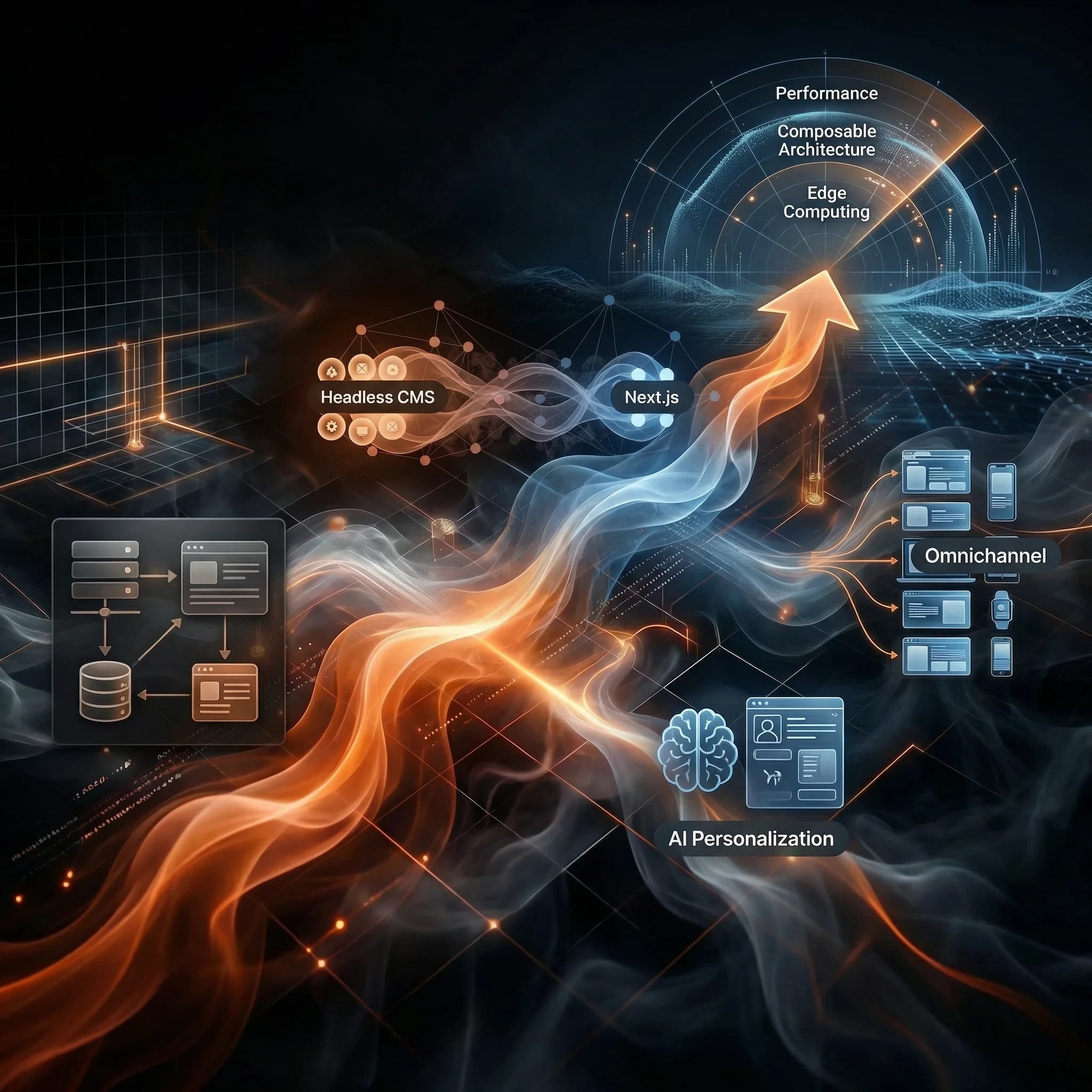
- Choose flexible platforms — Headless CMS positions you for AI integration
Risk Level: Medium
AI tools are maturing but not perfect. Expect iterations. Start with supervised AI (human review) before autonomous AI.
Trend 2: Edge-First Architecture
What's Happening
Computing is moving to the edge—servers distributed globally, closer to users.
Why it matters:
- Sub-100ms response times globally
- Reduced origin server load
- Better performance in emerging markets
- Lower costs at scale
Technical shift:
- Server-side rendering at the edge
- Distributed databases
- Regional content caching
- Edge functions replacing central servers
Real Impact
| Architecture | User in NYC | User in Singapore |
|---|---|---|
| Traditional US server | 50ms | 300ms |
| CDN with edge caching | 20ms | 80ms |
| Full edge computing | 20ms | 30ms |
For global businesses, this is transformative.
How to Prepare
- Choose edge-ready hosting — Vercel, Cloudflare, Netlify all offer edge computing
- Use headless CMS — Content served via CDN, not from origin
- Audit global performance — Test from multiple regions
- Design for edge — Static where possible, dynamic at the edge when needed
Risk Level: Low
Edge computing is proven technology. The main risk is over-engineering—not every site needs full edge architecture.
Trend 3: Performance as a Ranking Signal (Getting Stricter)
What's Changing
Google's Core Web Vitals have been around since 2021. But the bar keeps rising:
2026 expectations:
- LCP (Largest Contentful Paint): Under 1.8 seconds (was 2.5s)
- FID/INP (Interaction responsiveness): Under 100ms
- CLS (Layout Shift): Under 0.05 (was 0.1)
Sites meeting "good" thresholds in 2023 may fail in 2026.
The Competitive Pressure
- User expectations are rising (fast is the new normal)
- Google rewards better performers
- Competitors are optimizing aggressively
- Mobile-first indexing means mobile performance is THE performance
How to Prepare
- Benchmark now — Know your current Core Web Vitals
- Optimize images ruthlessly — WebP/AVIF, proper sizing, lazy loading
- Minimize JavaScript — Every KB counts on mobile
- Consider modern frameworks — Next.js, Astro deliver better baseline performance
- Monitor continuously — Performance degrades over time without attention
Risk Level: High
Poor performance will increasingly hurt rankings and conversions. This isn't optional.
Trend 4: Conversational Interfaces
What's Evolving
Beyond chatbots—conversational experiences are becoming primary interfaces:
- Search is conversational: "Find me a red dress under $100 that ships by Friday"
- Navigation is conversational: "Show me your sustainability initiatives"
- Transactions are conversational: "Book a table for 4 on Saturday around 7pm"
The Shift
Old model: User navigates through menus to find information New model: User states intent, interface responds appropriately
Where This Works
- E-commerce: Product discovery, complex filtering
- Travel: Multi-variable bookings
- Healthcare: Symptom checkers, appointment scheduling
- Finance: Plan comparisons, recommendations
Where It Doesn't (Yet)
- Simple sites with limited options
- Tasks that are faster with traditional UI
- Situations requiring visual comparison
How to Prepare
- Structure content semantically — AI needs to understand your content
- Build with APIs — Conversational interfaces need data access
- Capture common queries — What do users actually ask?
- Start hybrid — Conversational search alongside traditional navigation
Risk Level: Medium
The technology works, but implementation requires investment. Not essential for every site yet.
Trend 5: Sustainability Metrics
Why It Matters Now
- Users care: 73% of consumers want to know brands' environmental impact
- Regulations coming: EU sustainability reporting requirements expanding
- Competitive differentiation: Early adopters gain trust
- Actual impact: Digital infrastructure is 4% of global emissions
Web Sustainability Factors
| Factor | Impact | Fix |
|---|---|---|
| Page weight | High | Optimize images, reduce JS |
| Server efficiency | High | Green hosting, edge computing |
| Data transfer | Medium | Efficient APIs, caching |
| Device energy | Medium | Efficient code, dark mode |
| Infrastructure | High | Renewable-powered hosting |
How to Prepare
- Measure your footprint — Tools like Website Carbon Calculator
- Optimize efficiency — Smaller, faster sites use less energy
- Choose green hosting — Many major hosts are carbon-neutral
- Report transparently — Share your sustainability efforts
Risk Level: Low
This is mostly about efficient practices that also improve performance. Win-win.
Trend 6: Composable Tech Stacks
The Movement
Away from monolithic platforms toward best-of-breed compositions:
Old approach:
- Salesforce Commerce Cloud (does everything, flexibility limited)
- WordPress with 30 plugins (complexity, conflicts, security)
- All-in-one SaaS (locked into their roadmap)
Composable approach:
- Headless CMS (content) + Commerce platform (transactions) + Personalization engine (experience) + Analytics (measurement)
- Each component is best-in-class
- Swap components without rebuilding everything
Why 2026?
- Maturity: Integration standards are stabilizing
- Cost: Component tools increasingly affordable
- Talent: Developers prefer modern, specialized tools
- Speed: Faster to add features with right components
How to Prepare
- Audit your stack — What's monolithic? What could be composed?
- Start with content — Headless CMS is often the first composable piece
- Design for APIs — Everything should talk to everything
- Document integrations — Composable requires clear architecture
Risk Level: Medium
Composable offers flexibility but requires planning. Poor composition creates its own complexity.
Trend 7: Micro-Interactions and Motion
What's Changing
Static websites feel outdated. Users expect responsive, dynamic interfaces:
- Meaningful transitions: Content that flows between states
- Feedback loops: Immediate response to every action
- Personality through motion: Brand expression via how things move
- Scroll-driven narratives: Stories that unfold as you scroll
The Balance
More motion ≠ better. The trend is toward purposeful motion:
✓ Button states that confirm clicks ✓ Loading indicators that reduce perceived wait ✓ Transitions that maintain context ✓ Reveals that guide attention
✗ Motion for motion's sake ✗ Animations that slow users down ✗ Effects that distract from content ✗ Heavy animations that hurt performance
How to Prepare
- Define your motion language — Consistent animation style
- Use modern tools — Framer Motion, GSAP, CSS transitions
- Test performance impact — Animations shouldn't hurt speed
- Respect user preferences — Honor reduced-motion settings
Risk Level: Low
Thoughtful motion enhances experience. Overdone motion annoys users.
Trend 8: Privacy-First Personalization
The Paradox
Users want personalization AND privacy. 2026 solutions must deliver both.
What's Dying
- Third-party cookies (finally, fully)
- Invasive tracking
- Data selling between parties
- Cross-site behavioral tracking
What's Rising
- First-party data strategies: Using your own customer relationships
- Contextual personalization: Based on current behavior, not history
- Edge personalization: Happening in-browser, not on servers
- Explicit preferences: Users choosing their experience
- Anonymous personalization: Recommendations without identification
How to Prepare
- Build first-party data collection — Email subscribers, accounts, preferences
- Implement consent properly — Real choice, not dark patterns
- Personalize with context — Current session behavior, stated preferences
- Prepare for cookieless — Test your analytics without third-party cookies
Risk Level: High
Privacy regulations are tightening. Companies not adapting face compliance risks and loss of personalization capabilities.
What to Do Now
Immediate (Next 30 Days)
- Audit Core Web Vitals — Know where you stand
- Test mobile experience — Actually use your site on a phone
- Review analytics setup — Is it cookieless-ready?
- Document your tech stack — What's composable? What's locked in?
Short-Term (Next 90 Days)
- Improve performance — Fix the low-hanging fruit
- Evaluate headless — If not already using, assess fit
- Explore AI tools — Start with something small
- Define motion language — How should your site feel?
Medium-Term (Next 6 Months)
- Build first-party data strategy — What can you collect ethically?
- Implement edge architecture — If serving global users
- Add conversational elements — Where does it make sense?
- Measure sustainability — Start tracking your footprint
What to Ignore
Not every trend is worth chasing:
Skip These (For Most Businesses)
- VR/AR web experiences — Cool but niche. Unless you're in specific industries (real estate, retail), the ROI isn't there yet.
- Web3/blockchain integration — Still finding its use cases. Don't bolt it on for buzzword value.
- Voice-first design — Voice search is growing, but voice-only navigation is still rare. Optimize for voice queries, not voice interfaces.
- Experimental frameworks — Stick with proven tools (Next.js, Nuxt, Astro) rather than chasing every new framework.
The Rule
Adopt trends that solve real user problems or create measurable business value. Everything else is distraction.
Summary: 2026 Readiness Checklist
| Trend | Priority | Action |
|---|---|---|
| AI Integration | Medium | Start experimenting |
| Edge Computing | Medium | Choose edge-ready hosting |
| Performance Standards | High | Optimize now |
| Conversational UI | Low-Medium | Structure content, explore tools |
| Sustainability | Medium | Measure, optimize, report |
| Composable Stack | Medium | Evaluate architecture |
| Motion Design | Low | Define purposeful motion language |
| Privacy-First | High | Build first-party strategy |
Stay Ahead
The businesses that thrive in 2026 won't be those who adopted every trend. They'll be the ones who:
- Nailed the fundamentals (performance, mobile, SEO)
- Chose relevant innovations (based on their users and business)
- Built flexible architecture (ready to adapt as things change)
- Focused on value (not vanity metrics or buzzwords)
Related Reading:
- Headless CMS Explained Simply — The foundation for modern web architecture
- Free Website Audit Checklist — Assess your current readiness
- Content That Works Everywhere — Prepare for omnichannel delivery
Need help evaluating which trends matter for your business? Let's talk.
Have questions about specific trends? Reach out — I help businesses navigate what's hype and what's opportunity.