




E-Commerce Growth: Personalization Without Custom Code
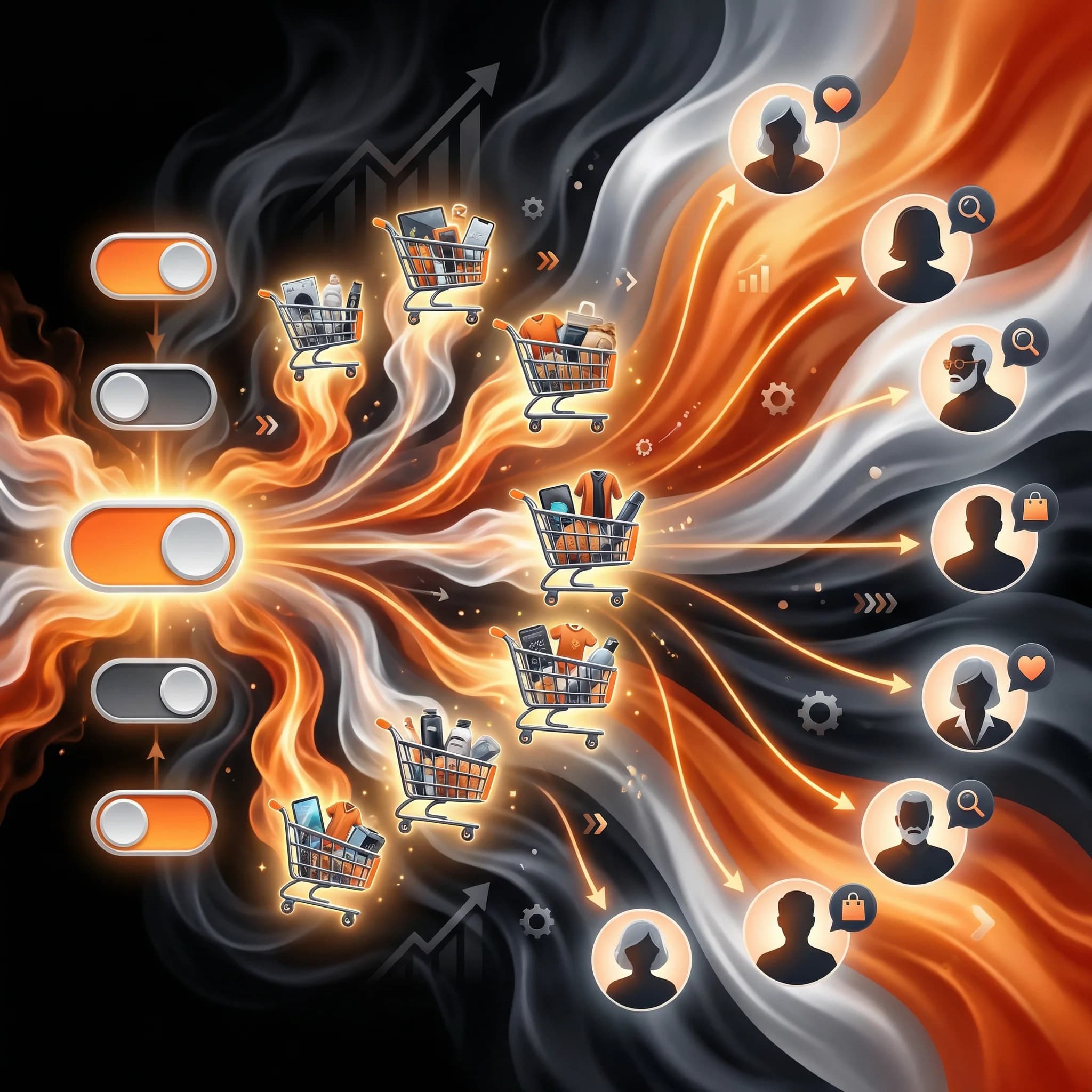
Personalized shopping experiences drive 40% more revenue. Learn how modern headless commerce lets you deliver Netflix-style recommendations without a development team.
E-Commerce Growth: Personalization Without Custom Code
Amazon does it. Netflix does it. Spotify does it.
They show you exactly what you want to see, often before you know you want it.
And it works. Amazon attributes 35% of its revenue to personalized recommendations.
But you're not Amazon. You don't have thousands of engineers.
Good news: you don't need them.
Why Personalization Matters Now
Customer expectations have shifted:
- 80% of shoppers expect personalized experiences
- 71% feel frustrated when shopping feels impersonal
- Personalized emails deliver 6x higher transaction rates
The math is compelling: A store doing $500K/year with a 15% lift from personalization = $75,000 additional revenue.
That's not theoretical. That's what modern personalization tools deliver.
The Old Way (Expensive)
Traditional personalization required:
- Custom recommendation engine (6+ months development)
- Data warehouse setup ($50K+)
- Machine learning team (expensive, hard to hire)
- Ongoing maintenance and optimization
- Integration with every touchpoint
Total investment: $200K - $500K before seeing results.
This is why only enterprise players could do it.
The New Way (Accessible)
Modern headless architecture + specialized tools = personalization without the development burden.
The Stack:
- Headless CMS (Sanity) - Stores personalization rules and content variations
- E-commerce platform (Shopify, commercetools) - Transaction layer
- Customer Data Platform (Segment, RudderStack) - Unifies customer data
- Personalization engine (Dynamic Yield, Nosto, built-in CMS features)
Total Investment: $500 - $5,000/month depending on traffic and sophistication.
Types of Personalization (Ranked by Impact)
1. Behavioral (Highest ROI)
Based on what this specific visitor has done:
- Recently viewed products
- Items added to cart (abandoned cart recovery)
- Purchase history recommendations
- Browse pattern recognition
Implementation: Typically built into commerce platforms or easy to add.
Example: "Based on your recent interest in trail running shoes, here are matching accessories."
2. Segment-Based
Group visitors by characteristics:
- First-time vs. returning visitors
- Geographic location
- Traffic source (Google vs. Instagram vs. email)
- Device type
- Customer lifetime value tier
Implementation: Define rules in your CMS, serve different content to different segments.
Example: First-time visitors see welcome offer. Returning customers see loyalty benefits.
3. Contextual
Based on external factors:
- Weather (show rain gear when it's raining locally)
- Time of day (morning vs. evening)
- Season/upcoming holidays
- Local events
Implementation: API integrations + content rules in CMS.
Example: Showing winter gear to visitors from cold regions while showing summer items to warm climates.
4. Predictive (Requires More Data)
AI-powered predictions:
- "Customers who viewed X also bought Y"
- Predicted next purchase timing
- Churn risk identification
- Lifetime value prediction
Implementation: Requires sufficient data volume. AI tools learn from your catalog and customer behavior.
Building Blocks in Sanity
Personalization-Ready Content Model
Product Page Content:
├── Default Hero Image
├── Hero Image Variants
│   ├── First Visit
│   ├── Returning Customer
│   └── High-Value Customer
├── Product Description
├── Social Proof (dynamic)
│   ├── "Popular in your area"
│   ├── "X people bought today"
│   └── Custom testimonials by segment
├── Recommendations Section
│   ├── Rule: Same category
│   ├── Rule: Frequently bought together
│   └── Rule: AI-powered suggestions
└── CTA Variations
    ├── Default
    ├── Urgency variant (limited stock)
    └── Loyalty variant (member pricing)
Content Rules Engine
Define rules without code:
- IF visitor is new AND from paid ad THEN show conversion-focused hero
- IF visitor has abandoned cart THEN show urgency messaging
- IF customer has high LTV THEN show exclusive offers
Marketing team manages rules. Developers not required.
Real Implementation Examples
Example 1: First-Time Visitor Flow
Scenario: New visitor from Google ad lands on product page.
Personalized Experience:
- Welcome message acknowledging they're new
- Simplified navigation (not overwhelming)
- Trust signals prominent (reviews, guarantees)
- First-order discount displayed
- Exit-intent popup with email capture
Default Experience: Standard product page, no special treatment.
Result: 25% higher conversion for new visitors.
Example 2: Abandoned Cart Recovery
Scenario: Visitor added items but didn't purchase (within last 7 days).
Personalized Experience:
- Homepage banner: "Your cart is waiting"
- Personalized email sequence triggered
- Return visit shows cart items prominently
- Potential time-limited discount
Default Experience: Generic homepage, cart forgotten.
Result: 15-30% abandoned cart recovery.
Example 3: Weather-Based Merchandising
Scenario: Fashion retailer selling year-round.
Personalized Experience:
- Detect visitor's location
- Check local weather API
- Show relevant products prominently
- Cold weather → Coats, sweaters
- Rainy → Rain gear, boots
- Hot → Summer collections
- Event-based (local sports game) → Team gear
Default Experience: Generic seasonal merchandising.
Result: 20% lift in category page conversions.
Example 4: VIP Customer Treatment
Scenario: Customer identified as high-value (top 10% spenders).
Personalized Experience:
- Exclusive "VIP" badge/section visible
- Early access to new products
- Special pricing or bundles
- Priority customer service links
- Thank you messaging
Default Experience: Standard experience, no recognition.
Result: 40% higher repeat purchase rate for recognized VIPs.
Setting Up Without Developers
Step 1: Enable Customer Identification
Basic: Browser cookies track anonymous visitors Better: Email/account login unifies sessions Best: Customer data platform (CDP) creates unified profiles
Tools:
- Segment (industry standard)
- RudderStack (open-source alternative)
- Shopify's built-in customer tracking
Step 2: Define Your Segments
Start simple. Expand later.
Essential Segments:
- New visitors (never purchased)
- One-time customers
- Repeat customers
- VIP customers (top 10%)
- At-risk (haven't purchased recently)
- Cart abandoners
Step 3: Create Content Variations
In Sanity, create variants for key pages:
- Homepage hero
- Product page CTAs
- Collection page ordering
- Checkout messaging
Each variant targets a specific segment or condition.
Step 4: Implement Rules
In Sanity: Use conditional fields or create a rules engine:
IF segment = "new_visitor"
THEN hero = "welcome_hero"

IF segment = "cart_abandoner"
THEN show_urgency = true
In Frontend: Read visitor segment from CDP, request appropriate content from CMS.
Step 5: Measure Everything
Track by segment:
- Conversion rate
- Average order value
- Pages per session
- Return visit rate
A/B test variations to optimize.
Quick Wins (Week 1)
These require minimal setup:
-
Recently Viewed Section
- Store in local storage
- Display on homepage and product pages
- Most e-commerce platforms have built-in
-
Geo-Based Currency/Language
- Detect IP location
- Show appropriate currency
- Improves international conversion
-
Return Visitor Greeting
- "Welcome back!" personalization
- Simple cookie-based detection
-
Social Proof Personalization
- "Popular in [their city]"
- "X people viewing now"
- Trust-building without complex logic
Medium-Term Wins (Month 1)
-
Segment-Based Homepage
- New vs. returning visitors
- Different hero content
- Different featured products
-
Abandoned Cart Flow
- On-site: Cart reminder banner
- Off-site: Email sequence
- Return visit: Cart highlight
-
Category Page Reordering
- Show previously viewed categories first
- Boost previously purchased brands
Advanced Plays (Month 3+)
-
AI Recommendations
- "You might also like"
- "Frequently bought together"
- Requires data volume
-
Predictive Personalization
- Next best action
- Optimal send times
- Churn prevention
-
Cross-Channel Consistency
- Same personalization across web, email, ads
- Unified customer journey
Privacy-First Personalization
DO:
- Use first-party data primarily
- Be transparent about data collection
- Provide easy opt-out
- Comply with GDPR/CCPA
- Personalize based on behavior, not personal data
DON'T:
- Buy third-party data
- Track without consent
- Be creepy (too personal too fast)
- Ignore privacy requests
Good Example: "Based on your recent browsing" (behavioral, expected)
Bad Example: "We noticed you searched Google for..." (creepy, unwelcome)
Measuring Success
Key Metrics
| Metric | Typical Lift | How to Measure |
|---|---|---|
| Conversion rate | +10-30% | Compare personalized vs. control |
| Average order value | +10-20% | Track by segment |
| Return visitor rate | +15-25% | Cohort analysis |
| Email open rate | +20-30% | A/B test personalization |
| Cart recovery | +15-30% | Abandoned cart funnel |
ROI Calculation
Simple Formula: (Lift × Current Revenue) - Tool Costs = ROI
Example:
- Current revenue: $50K/month
- Personalization lift: 15%
- Additional revenue: $7,500/month
- Tool costs: $1,000/month
- Net ROI: $6,500/month
Getting Started
-
Audit current state
- What personalization exists?
- What data do you collect?
- What tools are available?
-
Start with one segment
- New visitors are often easiest
- Clear value proposition
- Easy to measure
-
Implement quick wins
- Recently viewed
- Geo-detection
- Return visitor recognition
-
Expand systematically
- Add segments
- Create variations
- Test and optimize
-
Scale with tools
- CDP for data unification
- AI recommendations
- Predictive analytics
Related Reading:
- Headless CMS Explained Simply — The foundation for flexible personalization
- Content That Works Everywhere — Omnichannel content strategy
- 7 Signs Your Website is Costing You Customers — Is poor UX affecting your conversions?
I help e-commerce businesses implement personalization without massive development investment. Let's discuss your situation.
Running an e-commerce business? Reach out for a free consultation on personalization opportunities.